
Choosing Your Dining Table: Size, Style, Wood & Finish
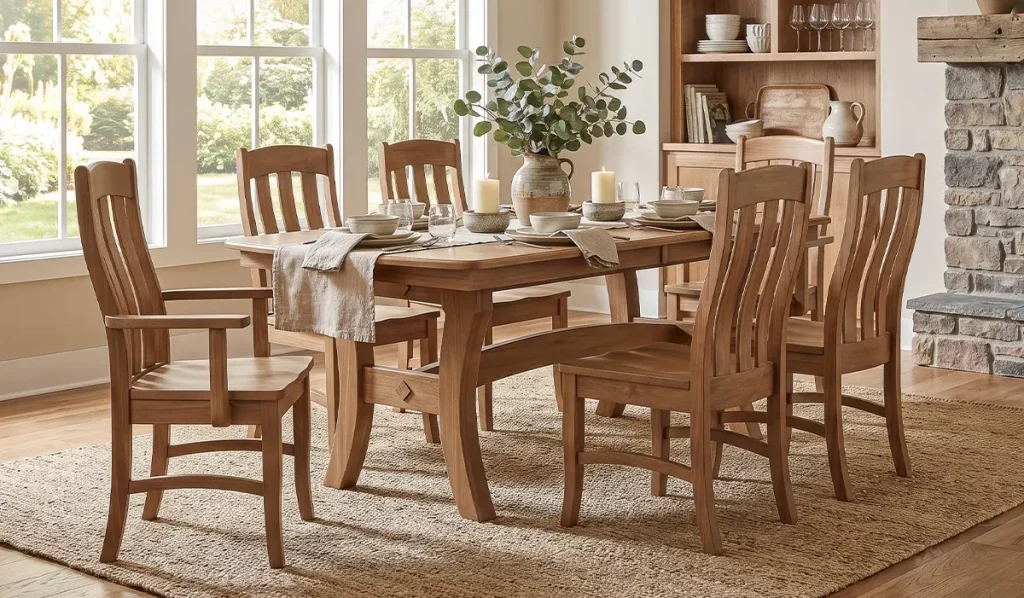
A dining table is more than a place to sit down for a meal. It is often where families gather at the end of the day, where holidays are celebrated, homework gets finished, conversations linger, and guests somehow always end up sitting long after dinner is over.
When you’re choosing a handcrafted dining table, there are a lot of possibilities. Size, shape, base style, wood species, stain, edge profiles, leaves and other options can make two versions of the same table look completely different.
The good news is that you don’t have to make every decision at once. Start with the practical choices, then work your way toward the details that make the table yours.
Start With the Right Size
Before choosing a wood or falling in love with a particular style, start with your room.
Think about how much space you have not only for the table itself, but also for chairs and the people using them. You want enough room to comfortably pull out a chair and move around the table without making the dining area feel crowded.
It also helps to think about how you actually use your table. How many people sit there on an ordinary day? How many do you want to accommodate for holidays and family gatherings?
A smaller table with extension leaves can be a great solution when you don’t need a large table every day. You can keep the room comfortable most of the time and add seating when everyone comes over.
Think About Shape
Rectangular tables are a natural choice for many dining rooms and offer plenty of flexibility when you need additional seating.
Round tables can make conversation feel especially comfortable because everyone is gathered around a common center. They’re also a great option for square dining spaces.
Depending on the builder and table, you may also find oval, boat-shaped, bow-end, clipped-corner and other tabletop shapes. These subtle changes can have a surprisingly large effect on the personality of the finished table.
There isn’t one shape that’s right for every room. The goal is to find the one that works with your space and the way you want the room to feel.
Choose a Base That Works for You
The base of a dining table affects more than its appearance.
A traditional four-leg table has a familiar, timeless look, but the placement of the legs can affect where chairs fit—particularly when you’re adding people around an extended table.
Pedestal and trestle tables provide a different look and can offer more flexibility with seating because there aren’t four corner legs to work around.
This is one of those decisions where it’s worth considering both style and function.
Plan for Everyday Seating—and Special Occasions
If your family normally seats four or six but occasionally hosts ten or twelve, you don’t necessarily need a table sized for twelve people every day.
Extension leaves allow many Amish dining tables to grow when you need the additional room. Depending on the table, leaves may be removable, self-storing, or part of an extension mechanism.
When comparing tables, pay attention to the number and size of leaves available and how the table expands. If entertaining is important to you, this can be every bit as important as the table’s everyday dimensions.
Choose Your Wood
Once you’ve worked out the practical decisions, you can start having some fun with the appearance of your table.
The wood species you choose affects much more than color. Grain pattern, natural variation, hardness and the way a wood accepts stain all contribute to the finished appearance.
Oak has a prominent grain. Brown Maple tends to have a smoother appearance. Cherry develops its own distinctive character and color over time. Quarter Sawn White Oak can bring beautiful grain patterns and a strong Arts & Crafts influence to a table.
There are many other hardwoods available as well, depending on the builder.
Want to learn more about the different hardwoods and finishes available? Take a look at our Choosing the Right Wood & Stain guide for a closer look at your options.
Then Choose the Finish
This is where your table really begins to become your table.
The same design can feel completely different depending on the combination of wood and stain. A lighter finish can emphasize the natural character of the wood and create an airy feel, while a deeper stain can give the same table a richer, more traditional presence.
Don’t feel that your new table has to match every piece of wood in the room perfectly. Coordinating tones often creates a more natural, collected look than trying to make everything identical.
And if you’re unsure how a particular stain will look on a particular wood species, ask us. This is exactly the kind of decision we’re happy to help with.
Don’t Forget the Details
Once the major choices are made, smaller details can put the finishing touches on the table.
Depending on the builder and design, you may be able to select different tabletop edges, shapes, thicknesses and other features. Some tables also offer two-tone finishes, allowing the top and base to be finished differently.
These options may seem small individually, but together they can dramatically change the finished look.
A Table Made for Your Home
One of the best things about choosing Amish-made furniture is that you aren’t limited to taking home whatever happens to be sitting on a showroom floor.
You can start with a table design you love and make thoughtful choices about the size, shape, base, wood, stain and options until it fits your home and the way your family lives.
And you don’t have to figure it all out by yourself.
At Amish First Furniture, we’re happy to help you work through the choices, compare options, or answer questions before you order. A handcrafted dining table is something you may gather around for decades. Taking a little extra time to choose the right one is worth it.